Every Sunday at the Unitarian Universalist of Southern Delaware (UUSD) gathering on Route 9, the reverend Heather Rion Starr and her congregation pay tribute to the Lenape/Nanticoke tribes because the church sits on what was their land. Then there’s the Indian Mission U.M.C. “a faithful community of Christian believer’s who maintain and celebrate their Nanticoke Heritage as they invite others to join them in following God’s way through the example of Jesus Christ and through understanding God’s love.” It may surprise some to know the extent and influence of Native American tribes in Delaware. And there are many ways to learn more about the first settlers to the state.
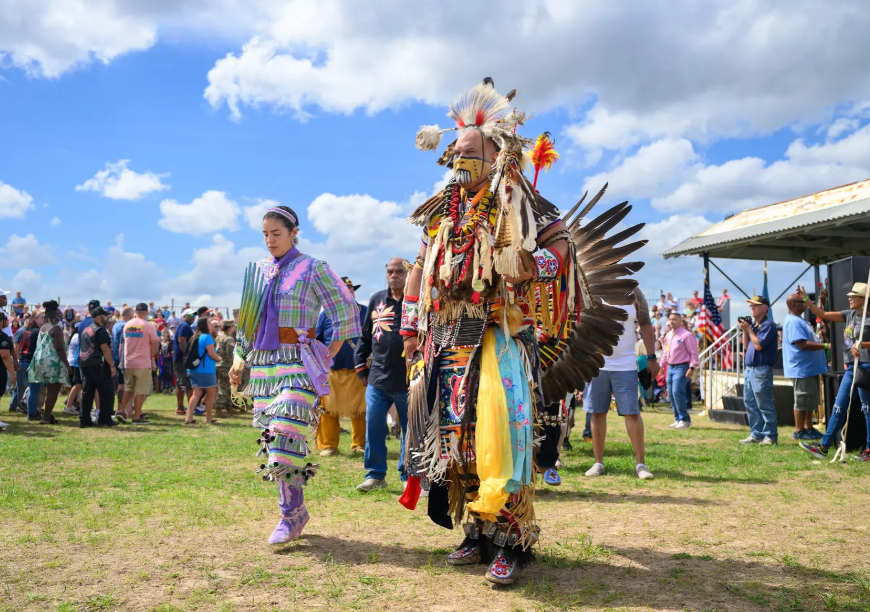
The Nanticoke Indian Museum in Millsboro is a good place to start. It is the only Native American Museum in the state and it is one of only 13 such sites that are listed by the Federal Government as a National Historic Landmark. According to the Museum’s website some of the artifacts on display date back to 8000 BC. Archaeologists estimate that the first inhabitants of Sussex County arrived about 10,000 to 14,000 years ago. Today, the Nanticoke tribe numbers close to 4,000 members and the tribe operates the museum. The tribe’s homeland stretches along the Nanticoke River from the Chesapeake Bay northeast into Delaware. Their annual Powwow typically takes place in early September but other events – such as the Winter Solstice Gathering at Camp Arrowhead on December 21 – are scattered throughout the year. The Pow Wow attracts nearly 15,00 people annually. The tribe’s website offers a wealth of information on the tribe’s history and culture.
The Lenape Indian Tribe of Delaware represents the citizens of a Lenape Community concentrated in central Kent County. They migrated south from Pennsylvania (having been displaced by Quakers) and, aside from Kent County the tribe maintains a strong presence in New Jersey. The tribe has had a long history of migration. They lived on hunting and growing foodstuffs and depended on the fertility of the land for survival. Eventually, the soils that they aggressively farmed gradually lost their productivity and an occupied area lost its usefulness in about two decades time. The West Pennsylvania Collaborative History web site offers a detailed description of how the tribe adapted and adjusted over time.
Both tribes have a rich history. The Nanticoke and Lenape Confederation offers insightful information on their Creation Stories. Both tribes have ancient origins in common and both originated from the Algonquin language-speaking people. The Slaughter Beach website notes that both tribes originated in Asia and likely crossed the Bering Strait during the warming period of the last Ice Age. Eventually, they made their way east and ultimately settled in Delaware. The Lenape-Nanticoke and Iroquois teamed up for the journey east but went their separate ways in Ohio or Pennsylvania. But not before confronting and defeating the Allegheni Indians of Western Pennsylvania. After this, the two tribes split, with the Iroquois going north into upstate New York, while the Lenape-Nanticoke eventually settled around the whole Delaware Valley and into Delmarva.
The Lenape-Nanticoke and Iroquois teamed up for the journey east but went their separate ways in Ohio or Pennsylvania. But not before confronting and defeating the Allegheni Indians of Western Pennsylvania. After this, the two tribes split, with the Iroquois going north into upstate New York, while the Lenape-Nanticoke eventually settled around the whole Delaware Valley and into Delmarva.
The Nanticoke resisted European colonial intrusion as early as the 1650’s, not long after the Dutch settled Lewes in 1631.
By Mary Jo Tarallo, Resident Journalist
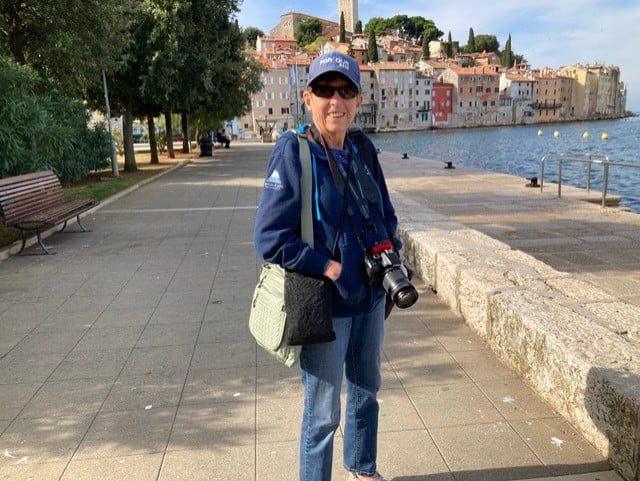
Mary Jo Tarallo spent much of her career in public relations with various non-profits and spent 40 years involved with the ski industry as a journalist, public relations director for a national trade association and as executive director of the Learn to Ski and Snowboard initiative. Prior to her ski industry involvement she worked for the Maryland International Center in Baltimore and United Way of Central Maryland. She won a Gold Award for TV programming for a United Way simulcast that starred Oprah Winfrey. She has been cited for her work by numerous organizations. Mary Jo grew up in Baltimore, attended the University of Maryland and Towson University, lived in Washington, DC for 21 years and has been a full time resident of Rehoboth Beach and Milton since May 2019.

 Skip to content