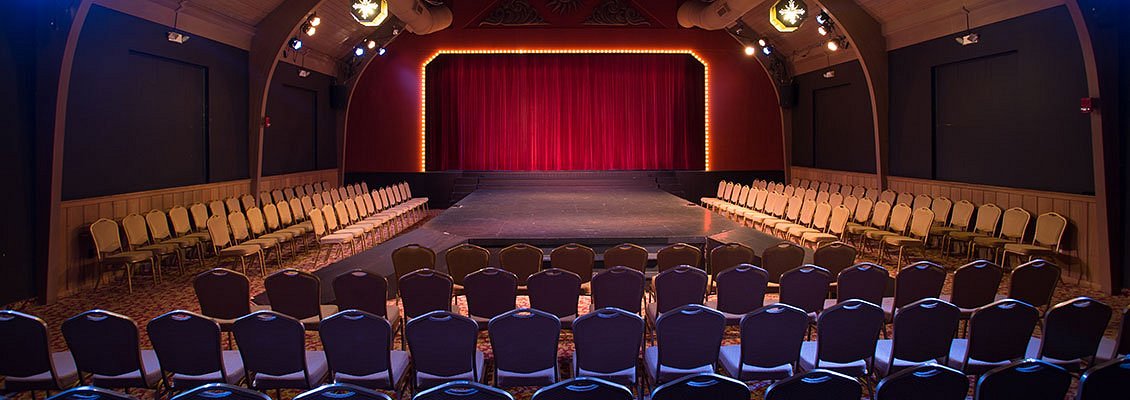
Anyone who has ever attended a show at Clear Space Theatre Company or the Milton Theatre — or any live theater in the region — experiences the polished final product of a complex, tightly integrated process that takes months to bring to life. Recently, Joe Gfaller, Managing Director of Clear Space Theatre Company, published an article in Letters titled “The Alchemy of Casting a Show,” explaining just one element of that intricate puzzle. And casting, as it turns out, is only the beginning. Producing a single show requires an extraordinary blend of talent, coordination, and behind-the-scenes magic — much of which may go delightfully unnoticed by the audience.
According to Gfaller, as many as 12 key professionals may be involved in mounting a production, though not every show requires them all. These roles include Director, Music Director, Choreographer, Stage Manager, Set Designer, Costume Designer, Lighting Designer, Sound Designer, Props Designer, Projection Designer, Dramaturg, Intimacy Coach, and Fight Choreographer. (A dramaturg, for the uninitiated, is a literary adviser who researches, selects, adapts, edits, and interprets texts for theater, opera, or film companies.)
This year, Clear Space is producing 11 shows — two fewer than usual — allowing each production a slightly longer run and a little more room to shine.
The Art (and Alchemy) of Casting
Casting is both complex and impressive. Clear Space holds in-person auditions each year in Rehoboth Beach, Washington, D.C., and New York City, while also accepting virtual submissions from performers who cannot attend in person. This year, 400 in-person audition slots across the three cities filled within 36 hours. An additional 1,058 virtual auditions were submitted before the deadline — a testament to the theater’s growing reputation.
Depending on the role, small-group auditions typically include both a vocal and dance performance, though some performers audition with song only. After initial auditions, directors decide on callbacks, which may take place in person, virtually, or through a combination of both formats.
Gfaller notes that the most challenging part of the process is distilling the wealth of input from directors and creative staff into final casting decisions — and then making the offers. It’s a delicate balancing act of talent, chemistry, scheduling, and vision.
Sets, Sequins, and Storage Units
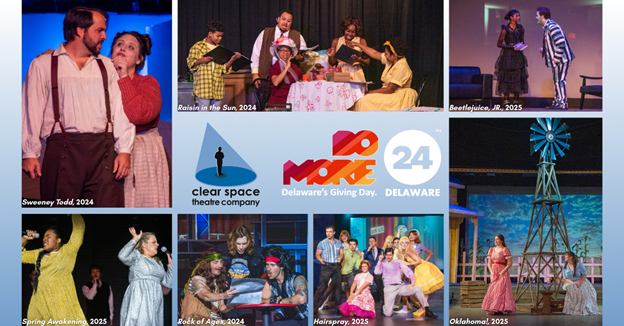
If casting is alchemy, set and costume design are feats of engineering. The March production of 42nd Street offers a perfect example. As a classic period piece, it demands elaborate costumes, detailed scenic design, and a larger production team than a smaller-scale, non-musical drama.
Productions like this go through multiple stages long before audiences see the first tap shoe hit the stage. Reusable sets and costumes are stored within the theater’s Baltimore Avenue building. When space runs tight, overflow is housed in five storage units around town. Coordinating these logistics is an art form all its own.
A Season of Song (and a New Stage Ahead)
Clear Space productions always feature a lively mix of musicals and non-musicals. The popular summer rotation typically leans into crowd-pleasing musicals for both locals and visitors enjoying the coastal vacation season. This year’s lineup includes The Cher Show, Mean Girls, and Pretty Woman — a trio guaranteed to bring big voices, big energy, and plenty of sparkle.
The company has also been in the headlines recently due to its planned move to a new home in Rehoboth Beach at 11 Christian Street, the current site of the Cape Henlopen Senior Center. That move is still a few years away, Gfaller says, so productions will continue at the retrofitted former Epworth Church on Baltimore Avenue, where Clear Space has entertained theatergoers for the past 15 years.
For audiences, the magic lasts a few hours. For the team behind the curtain, it’s months of collaboration, creativity, and careful orchestration — all to make it look effortless when the lights go up.
By Mary Jo Tarallo, Resident Journalist
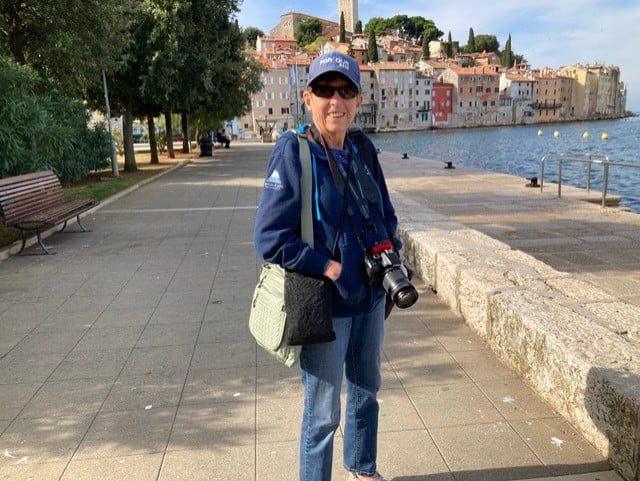
Mary Jo Tarallo spent much of her career in public relations with various non-profits and spent 40 years involved with the ski industry as a journalist, public relations director for a national trade association and as executive director of the Learn to Ski and Snowboard initiative. Prior to her ski industry involvement she worked for the Maryland International Center in Baltimore and United Way of Central Maryland. She won a Gold Award for TV programming for a United Way simulcast that starred Oprah Winfrey. She has been cited for her work by numerous organizations. Mary Jo grew up in Baltimore, attended the University of Maryland and Towson University, lived in Washington, DC for 21 years and has been a full time resident of Rehoboth Beach and Milton since May 2019.

 Skip to content