If you think you already know Rehoboth Beach and Lewes, spend an hour or two in their museums. You may be surprised by how much history is tucked inside these two relatively small spaces — and how much of that history still shapes life in Sussex County today.
Two local museums in particular make great stops: the Rehoboth Beach Museum at 511 Rehoboth Avenue and the Lewes History Museum, located inside the Margaret H. Rollins Community Center at 101 Adams Avenue. Both offer a chance to step away from the usual beach-town routine and discover the people, places and stories behind these communities.
And there is plenty to discover in October 2026.
Rehoboth Beach: More Than Beaches and the Boardwalk
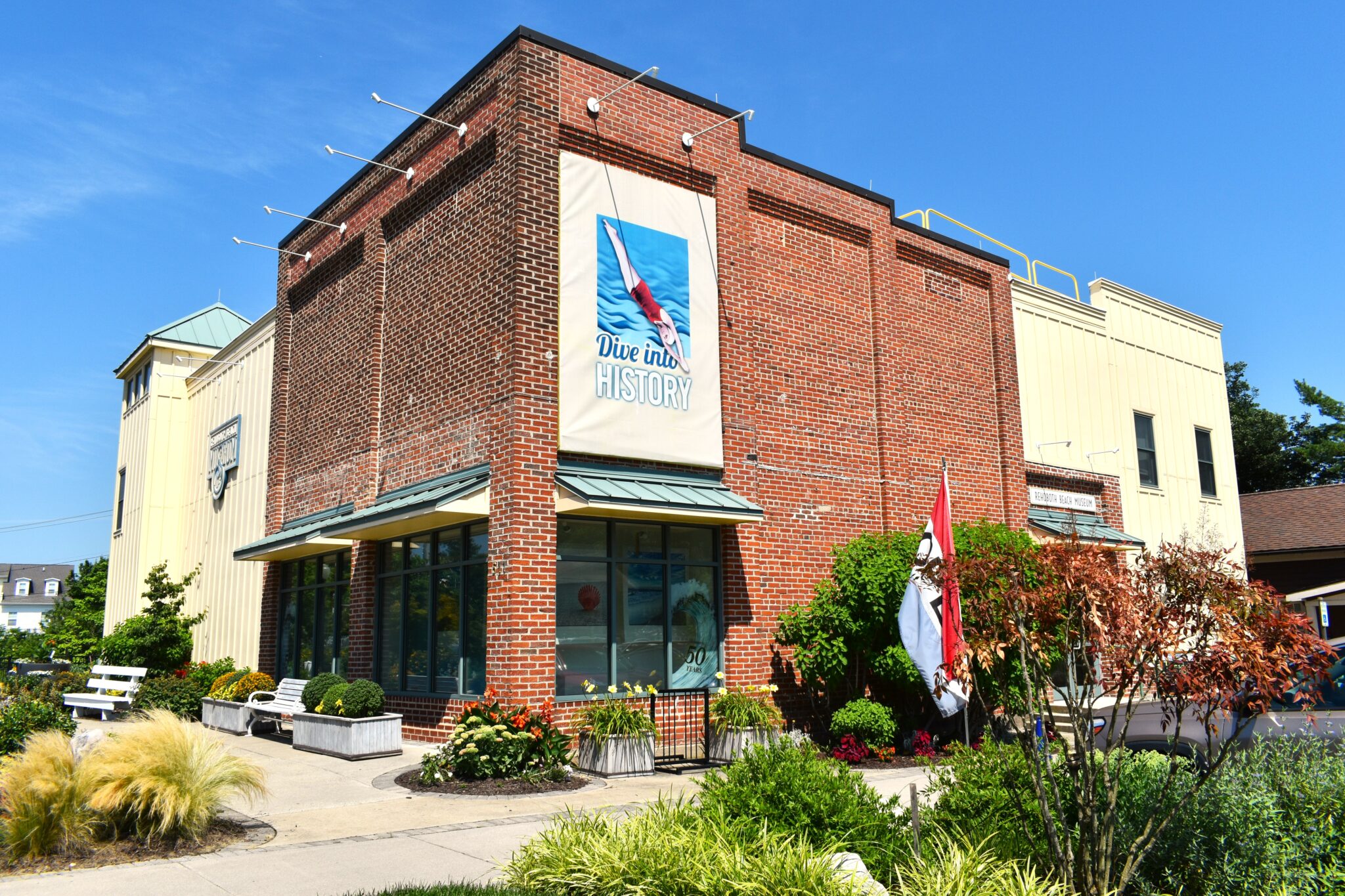
The Rehoboth Beach Museum is hard to miss. Located just past the canal, the building is home to one of the area’s most recognizable pieces of beach nostalgia: the bright orange Dolle’s sign.
For nearly six decades, that sign towered over the Rehoboth Beach Boardwalk, becoming part of the visual landscape of countless summer vacations. In 2026, the museum is celebrating that legacy with its “Ode to the Dolle’s Sign” poetry contest, a collaboration with the Delaware Poets Almanac. It is a fitting reminder that local history isn’t always found in old documents or dusty photographs. Sometimes, it is a giant orange sign that generations of visitors simply can’t imagine Rehoboth without.
Inside, the museum tells a much bigger story.
Rehoboth’s history reaches back long before today’s boardwalk, restaurants and summer crowds. The museum explores the region’s Native history, including the Nanticoke people, before moving into the community’s development as a Methodist seaside camp-meeting town.
Rehoboth Beach’s founding story begins in the early 1870s, when Methodist Episcopalians from Wilmington were searching for a seaside location for camp meetings. The community that emerged in 1873 was shaped by those religious beginnings — a rather different version of Rehoboth than the lively resort visitors know today.
The name itself comes from the biblical Book of Genesis. Isaac named a place Rehoboth after finding a well and declaring that the Lord had made room for them. That idea of making room has become an interesting thread running through the town’s history.
The museum also helps visitors understand how Rehoboth evolved from a religious retreat into the resort community it is today. And that evolution was not always predictable. A 2026 museum program, “Breaking the Rules: A History of Rehoboth’s Amusements,” looks at the town’s long and sometimes surprising relationship with entertainment — from the restrictions of the early Methodist camp-meeting era to the arcades, rides, theaters and other amusements that eventually became central to the Rehoboth experience.
History Has Many Voices
One of the most valuable things about a local museum is the opportunity to see a familiar place through someone else’s eyes.
The Rehoboth Beach Museum continues to emphasize the many communities that have helped shape the city, including its African American, Greek, Jewish and LGBTQ+ histories.
In 2026, the museum is also highlighting the story of CAMP Rehoboth through “Built by Community: LGBTQ+ History in Rehoboth.” The exhibit marks CAMP Rehoboth’s 35th anniversary and looks at the people and places that helped build a more visible LGBTQ+ community in Rehoboth Beach.
CAMP Rehoboth was founded in 1991 by Steve Elkins and Murray Archibald. What began as an effort to create a more positive and welcoming community became an important part of Rehoboth’s civic and cultural life.
That story is especially appropriate in a museum devoted to a town whose identity has continually evolved.
The museum’s interpretation of African American history is equally important. A 2025 exhibition, “Celebrating African American Rehoboth, 1690–1960,” explored the history of West Rehoboth, Black businesses and organizations, schools, churches and individuals who helped shape the community. Although that particular exhibit has ended, those stories remain part of the museum’s broader interpretation of Rehoboth’s history.
There Is Plenty Going On This October
The museum isn’t simply a place to look at old photographs.
October 2026 brings a particularly full schedule. Families can participate in the museum’s Saturday Story & Art program, while history buffs can attend programs such as “Stitching a State: Delaware Needlework in the Winterthur Collection” on October 8.
On October 17, the museum is offering a Historic Rehoboth Beach Bike Tour, taking participants through more than a century of local history. And for those who prefer their history with a little mystery, Haunted Histories returns October 23.
The museum also has rotating exhibitions. In October, visitors can see the 14th Annual Needlework Exhibition, running through November 1, along with other exhibits exploring Delaware maps, local history and the legacy of the Dolle’s sign.
The museum’s regular summer schedule continues through October 30: it is open Monday, Tuesday, Thursday and Friday from 10 a.m. to 4 p.m., and Saturday and Sunday from 10 a.m. to 2 p.m. It is closed Wednesdays. Beginning October 31, the museum shifts to its winter schedule.
And Then There Is Lewes
A short drive away, the Lewes History Museum offers another perspective on the history of the Cape Region.
The museum is part of Historic Lewes, the organization formerly known as the Lewes Historical Society. It is located inside the Margaret H. Rollins Community Center at 101 Adams Avenue — the same building that served as the Lewes Public Library for many years before the current library opened in 2016.
There is an important update from last year’s article, however: the museum did not simply close for renovations and reopen in May 2026.

Instead, the Lewes History Museum is currently open while renovations and reinterpretation work continue. Visitors will find a limited number of exhibits during this transition, while the Children’s Discovery Center remains temporarily closed. Historic Lewes says the museum is being reworked with a stronger emphasis on the area’s maritime heritage and connections to the organization’s other historic properties.
For October 2026, the Lewes History Museum is open Fridays and Saturdays from 10 a.m. to 4 p.m., with no admission charge through December.
That makes it a particularly easy stop for locals who may have driven past the building hundreds of times without ever walking inside.
Small Museums, Big Stories
What makes these museums worthwhile isn’t necessarily their size. It’s their ability to put today’s Sussex County into perspective.
The boardwalk looks different when you know about the Methodist camp meetings that came first. Rehoboth’s neighborhoods look different when you understand the history of West Rehoboth and the people who built their lives there. A familiar street in Lewes takes on new meaning when you begin to understand the area’s maritime past and its centuries-long role as a working coastal community.
And that’s the real appeal of local museums: you don’t have to be a history buff.
You just have to be curious.
For longtime residents, they can fill in pieces of the story you thought you knew. For visitors, they provide a deeper connection to the places they’re exploring. And for children, they offer something that a day at the beach simply can’t — the chance to discover that the towns around them have stories of their own.
So the next time you’re looking for something different to do in Sussex County, consider spending an hour inside one of these “small but mighty” museums.
You may leave seeing Rehoboth and Lewes just a little differently.

 Skip to content