Ever heard that children’s song called “Dem Bones”? It goes something like this: The toe bone’s connected to the ankle bone, the ankle bone’s connected to the foot bone, and so on.
Reflexology is a little like that—but not quite. It is a form of therapy in which pressure is applied to specific points on the feet, hands, and/or ears, based on the belief that these pressure points correspond to different organs and systems in the body. Reflexology is rooted in the theory that stimulating these points activates nerve pathways, improves circulation, and clears energy blockages to promote relaxation, reduce pain, and restore balance (homeostasis). In essence, it is thought to help “reset” the nervous system and encourage the body’s natural healing processes. The treatment is intended to promote relaxation, improve circulation, relieve stress, and support overall well-being.
The earliest evidence of reflexology dates back to ancient Egypt around 2,500 BC. As far back as 3,000 BC, health practices in China and India also involved applying pressure to the feet and hands as part of traditional healing systems focused on balancing energy.
Modern reflexology evolved from a practice known as Zone Therapy, pioneered by American physician Dr. William Fitzgerald in the early 20th century. Fitzgerald divided the body into ten vertical zones, and his work was later refined by Eunice Ingham, who developed detailed reflex maps of the feet that are still widely used today.
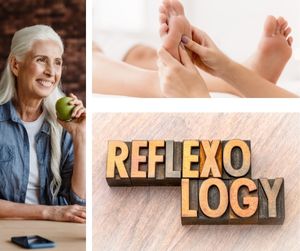
Zone Therapy itself is a holistic chiropractic method based on balancing the body’s six zones—glandular, eliminative, nervous, digestive, muscular, and circulatory—by adjusting specific spinal points. The goal is to restore nerve flow and help the body heal itself from stress, trauma, or poor diet.
Those considering reflexology as a wellness option may want to do some research and consult their primary care provider. Reflexology is sometimes described as a form of massage therapy; however, the website www.soothe.com categorizes it as “an alternative therapy method,” despite its hands-on nature. In Delaware, massage therapists are required to hold a state license to practice.
Lewes resident Mary Ledva is not a massage therapist, but she is a certified reflexologist. She explains the distinction this way: “The relationship between feet, reflexes, and the nervous system has long been a contributing factor in medicine and nursing assessments. Reflexology can be combined with massage, but the focus is different. Massage targets muscles and ligaments, whereas reflexology targets organs and tissues.” She does not necessarily recommend combining the two therapies.
Ledva has worked in nursing for 46 years, including 27 years as an Adult Nurse Practitioner in primary care. She has been practicing reflexology for eight years and received her national certification from the American Reflexology Certification Board (ARCB), one of two major credentialing bodies, the other being the Reflexology Association of America (RAA). She completed more than 200 hours of advanced training, including structural reflexology, ear reflexology for musculoskeletal conditions, reflexology for lymphatic drainage, and coursework in neurology, neurosurgery, and high-risk obstetrics.
According to Ledva, her clients primarily seek reflexology for stress reduction, anxiety, sinus congestion, neuropathy, edema, and post-operative recovery.
The decision to try reflexology is a personal one and often depends on how and why an individual believes it works. The www.soothe.com website cites a theory rooted in traditional Chinese medicine, which holds that the human body is composed of qi, or vital energy. Stress and negative emotions can block qi, resulting in imbalances affecting emotional, mental, physical, or spiritual health. Reflexology is believed to help restore balance by clearing these blockages.
A more modern theory suggests that reflexology may influence how the brain processes pain. When pressure points are stimulated, the resulting relaxation may reduce stress, which in turn can affect how pain is perceived.
By Mary Jo Tarallo, Resident Journalist
Mary Jo Tarallo spent much of her career in public relations with various non-profits and spent 40 years involved with the ski industry as a journalist, public relations director for a national trade association and as executive director of the Learn to Ski and Snowboard initiative. Prior to her ski industry involvement she worked for the Maryland International Center in Baltimore and United Way of Central Maryland. She won a Gold Award for TV programming for a United Way simulcast that starred Oprah Winfrey. She has been cited for her work by numerous organizations. Mary Jo grew up in Baltimore, attended the University of Maryland and Towson University, lived in Washington, DC for 21 years and has been a full time resident of Rehoboth Beach and Milton since May 2019.

 Skip to content