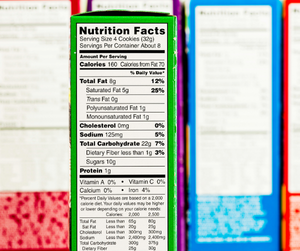
Reading food and personal product labels can be downright confusing. Or disheartening. For example, you may sadly discover that your favorite cereal’s top ingredient might be sugar and serves up carbohydrates equaling nearly 40% of the recommended daily allowance. Worse, it’s only your first meal of the day. Ugh.
Decluttering ingredient listings is now just a scan away, complete with a rating of the quality of thousands of labeled foods and personal care products.

Enter “Yuka,” a mobile app that analyzes a product’s nutritional value and rates it according to a 100-point scale. The score is meant to give shoppers a quick snapshot before they toss a box, bottle or jar into the cart. The color green indicates the product is considered excellent for health; yellow means fair, while orange or red suggests there may be reasons to look more closely.
For food products, Yuka’s rating is based on three main factors: nutritional quality, additives, and whether the product carries an official organic label. Nutritional quality carries the most weight and considers familiar label items such as sugar, sodium, saturated fat, calories, protein, fiber, and fruit or vegetable content. Additives are also evaluated, with higher-risk additives lowering a product’s score more sharply. Organic certification can add a smaller bonus to the final rating.
The appeal is obvious: instead of standing in the aisle trying to decode a long ingredient list, a shopper can scan the barcode and get an instant interpretation. The app also offers alternatives when a product scores poorly, which can make it easier to compare similar items without reading every label from scratch.
Yuka’s independence is part of its pitch. The company says brands cannot pay to influence scores or advertise in the app, and that its recommendations are not sponsored. That matters in a marketplace where front-of-package claims such as “natural,” “wholesome,” or “made with whole grains” can sound reassuring while still leaving plenty of questions unanswered.
There are alternative mobile apps to Yuka. Open Food Facts is an open sourced food database allowing consumers to view ingredients, including whether they are natural or artificially processed. Fooducate offers explanations about ingredients along with nutritional value. Another mobile app, Fig is helpful for people with known allergies or dietary restrictions. Users can set up a profile that will flag certain dangerous additives or allergens.
Yuka also analyzes personal care items, such as shampoo or lotion. Consumers concerned about ingredients with an environmental impact or cruelty-free (not animal tested) products can make informed decisions before purchasing. One of my favorites for this purpose is “Think Dirty,” which rates personal care products based on the purity of their ingredients. This is especially appealing to parents and grandparents of young children.
Although Yuka was founded in France in 2017 by a sister-brother team, it has substantially increased its presence in the United States. Most major brands of foods and personal products are now in their database, including many store brands such as Whole Foods and Trader Joe’s.
I took Yuka on a test drive in the grocery store recently. I consider myself very label-literate, but I was surprised with some of my scanning results. The brand yogurt I adore turned out to be the highest in grams of protein, but was also high in hidden sugars (beware of labels deceptively sugary, such as sucrose – just another name for sugar). Meanwhile, the store brand albacore tuna actually scored higher than the national brand due to sodium content.
And when it came to the snack aisle? I was appalled with some of the artificial ingredients, and wished I had left my phone in the car.
Granted, Yuka or other such apps are not a nutritionist in your pocket. A single score cannot account for every person’s diet, medical needs, budget, allergies or portion sizes. A food that scores poorly may still fit occasionally into a balanced diet, while a highly rated product is not automatically something everyone should eat without limits.
Used thoughtfully, however, Yuka can be a useful starting point. It can push consumers to notice sugar or unhealthy fats where they did not expect it, question additives they have never heard of, and compare products more carefully. An app does not replace the food label; it makes the label harder to ignore.
Perhaps that is its greatest value: it slows us down just long enough to ask one more question before buying. In a grocery aisle crowded with claims, colors, and clever packaging, that extra moment of attention may be the healthiest choice of all.
Give Yuka or one of the other mobile apps a try next time you visit the grocery store. Just be prepared for some surprises. Maybe you will be happily surprised? Regardless, you certainly will be better informed.
By Bridget FitzPatrick, Resident Journalist

 Skip to content