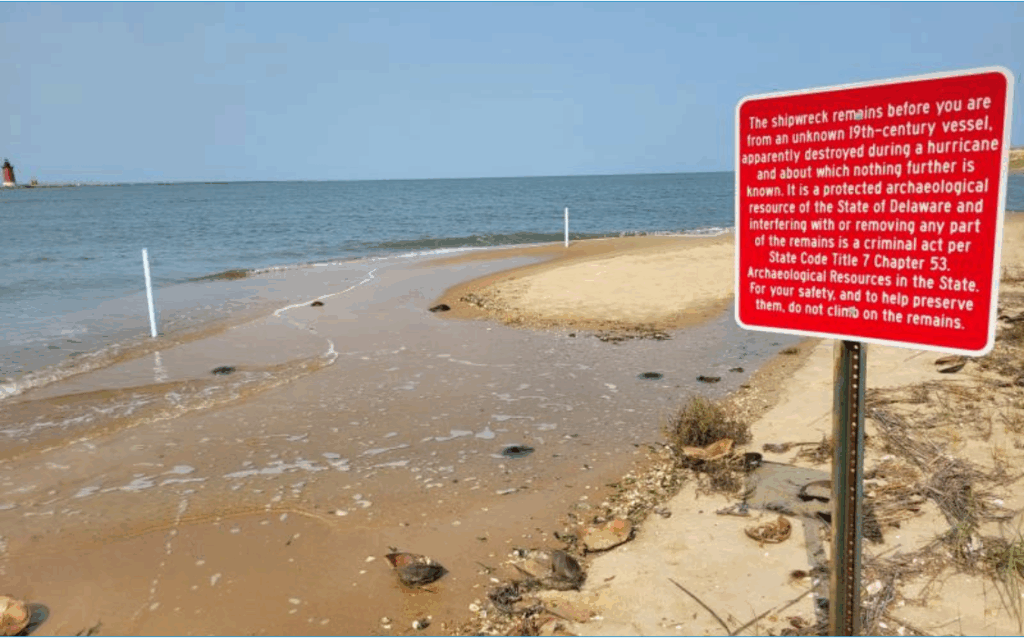
A surprising number of unmarked burial sites are dispersed across Sussex County. During a research into the resting places of numerous sailors and shipwreck victims now beneath the parking area of the Lewes Ferry terminal, additional related tales emerged.
It turns out, due to the swift development of Sussex County, a few construction sites have revealed some mysterious graveyards. It is believed that some plots uncovered contain deceased families, not just individuals.
When unmarked graves are discovered in Delaware, all ground-disturbing activities must stop immediately and be reported to the Delaware Division of Historical and Cultural Affairs (HCA). Archaeologists from the division will investigate, consult with the Medical Examiner if necessary, and determine the next steps.
Thanks to advances in science, including isotope and DNA testing, archaeologists have made great strides in determining the identities of the deceased. The research also includes property records dating as far back they were first recorded by Sussex County in the 17th century.
For example, when artifacts and remnants of a wooden coffin were discovered in 2014 during development of what is now Hawkseye in Rehoboth Beach, 11 graves (10 with human skeletal remains) were ultimately discovered by an archaeology team. Despite the absence of tombstones, archaeologist Edward Otter and his team were able to ultimately identify the graves of the Wolfe family, which purchased the property in 1754. (The earliest record of ownership of this large swath of land was 1674.)
The property was owned by the Wolfe family over several generations, as well as other prominent families in the Cape region, including familiar names such as Wolfe, Burton and Bookhammer.
https://www.ancestry.com/It was because of a clue Otter happened upon on ancestry.com the bodies were all members of the Wolfe family. Amazingly, a receipt for the purchase of a lead coffin for Mary Futcher Wolfe was Otter’s revealing clue. Although she died in Philadelphia where she lived with her son, her remains were transported back to her family property when the Philadelphia cemetery was exhumed in the 1890s. She had been transferred in a metal coffin matching the description on the receipt for its purchase that Otter discovered on Ancestry. The other graves on the Wolfe property were wooden and are presumed to all be members of the family.
Ultimately, the family remains were donated to the Smithsonian Museum, where physical analysis continues. They will remain there unless a descendant of the Wolfe family comes forward to have them reburied. Scientists will continue to use the analysis to learn about early Delaware descendants.
Future articles will examine other historic unmarked burial sites in the Cape region. In many cultures November is a month that traditionally celebrates the lives lost to the past. It is important that we also honor those whose stories will never be known, but whose lives were important, and now contribute to the discovery of Colonial life and culture – some of which hints at some dark eras of Delaware history.
By Bridget FitzPatrick

 Skip to content