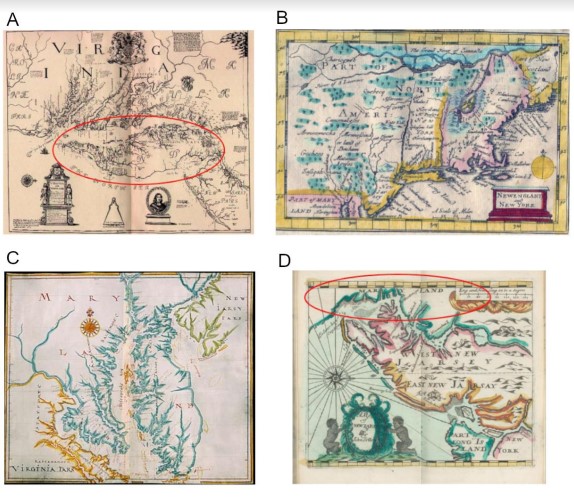
Forensic anthropology in Sussex County in recent decades has revealed more clues into the history of Delaware’s settlers, including the original Native Americans and first Dutch to arrive. Advances in DNA and isotope testing can even tell historians and anthropologists much about their diet and agricultural practices.
It is no surprise that artifacts and even human remains are occasionally discovered as the population of Sussex County continues, often at a construction site. That comes as no surprise, given the county’s substantial population growth.
When the discovery of artifacts or human remains happens, by law, any further construction ceases under Delaware code, contractor must notify the state’s Division of Historical and Cultural Affairs (DHCA).
An archaeological treasure dating to the late 1600s, “Avery’s Rest” was accidentally discovered in 1976 near Rehoboth Bay. In 2005, DHCA interceded on a proposed housing development in West Rehoboth because of historical significance (Avery’s Rest is on the National Register of Historic Places).The plantation was owned by John Avery, a prominent judge in Lewes during the period of transition between Dutch and English settlers.
Between 2012 and 2014, volunteers from the Archaeological Society of Delaware discovered human remains while excavating the area in search of clues of the plantation, such as walls or fences. Instead, a total of 11 unmarked burials were discovered, and were remarkably intact. It is believed that eight are members of the Avery family, of European descent who lived on the property between 1674 and 1682. The other three were of African descent and were likely Avery’s slaves; two are determined to be a father and his child.
Among the burials were a five month old, a five year old and adults ranging from 27-60.
The remains are currently at the Smithsonian National Museum of Natural History where they continue to be studied. Remarkable they were preserved well enough that forensic pathologists have been able to determine their approximate age, diet and trade (agriculture).
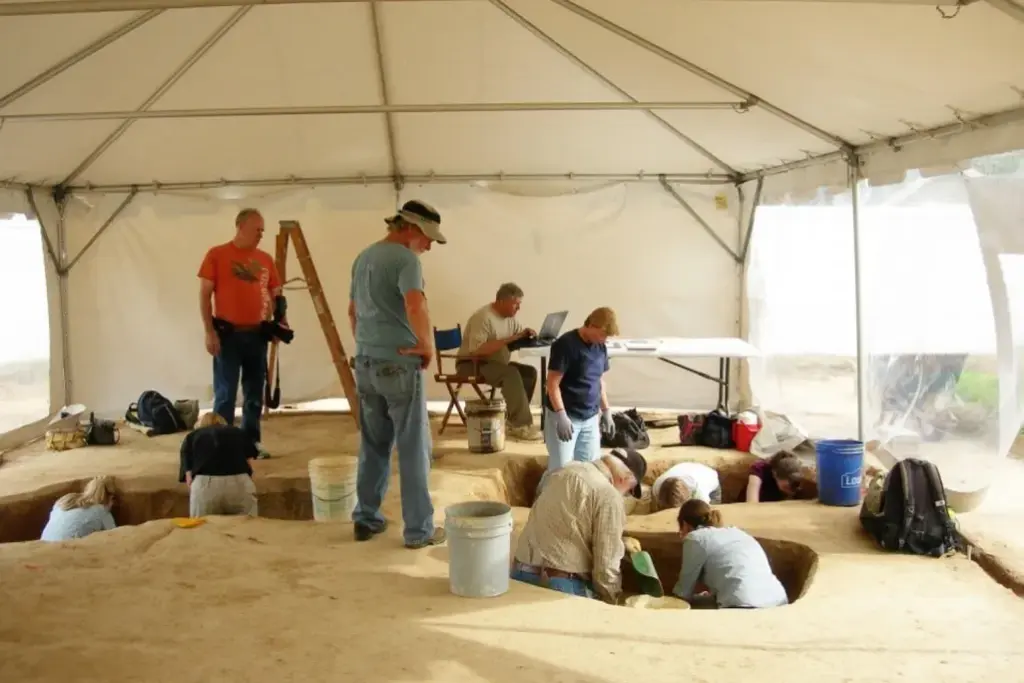
They’ve concluded that their diet was carbohydrate-heavy corn based, since all had considerable tooth decay. Interestingly, the pathologists even found evidence of tobacco use since all of the males have pipe stem grooves on their teeth. The African descendants were proven to be born somewhere in the mid-Atlantic, due to evidence of their drinking water.
Avery’s Rest is the oldest known unmarked burial site of Colonial life in Delaware. Of course, other archaeological digs have unearthed plenty of evidence of Native American artifacts that date farther back. When those are discovered, the Division of Historical and Cultural Affairs works closely with representatives of local tribes to ensure artifacts are recorded and preserved accordingly.
Based on all of the research thus far, Avery’s Rest has proven to be a valuable resource for understanding colonial life in the frontier Delaware. It raises questions about the origin of the African descendants in an era when records of their existence either did not exist, or were lost.
Although their stories remain untold, ongoing research will hopefully reveal more of their unheralded lives at Avery’s Rest. Fortunately, archaeologists have worked tirelessly to preserve precious history and culture of life on the frontier of Delaware.
Bridget FitzPatrick
 Skip to content