The Benefits (and Limitations) of Using “Smart Rings”
Smart rings, also referred to as fitness rings offer a comfortable and generally accurate glimpse into your general health statistics, including your sleep time and quality, heart and stress rate and daily activity level. But are they recommended by physicians, and what are their limited benefits?
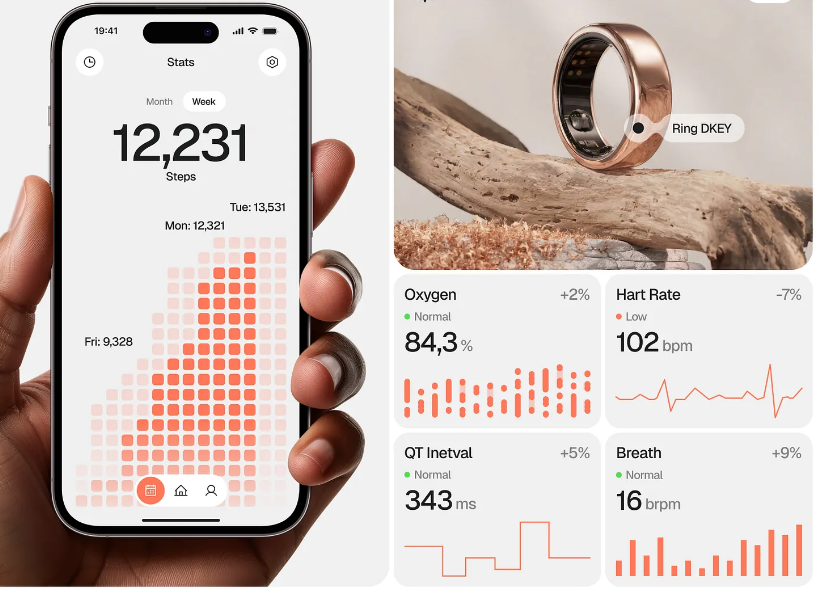
Fitness rings, for the fashion-conscious offer a more subtle look than, let’s say, an Apple watch its interactive screen and audible notifications. Popular styles include Oura, RingConn and Samsung Galaxy Ring. They blend in with everyday jewelry with several shades available. Both Oura and RingConn have slimmed down the width of the rings considerably since their first models.
Additional benefits include much longer battery life than cell phones and fitness watches. This provides more reliable and continuous monitoring with no gaps during a recharge. Rings also offer impressive water resistance for daily handwashing, showering and water exercise. They are far more convenient for sleep because of their unobtrusive and comfortable design.
There are of course cost considerations when choosing a fitness ring. The popular Oura, for example ranges in price from $349 – $399 and requires a monthly subscription of $5.99 for its phone or laptop app. The RingConn, which has Gen 2 and Gen 3 models ranging from $299 – $320 has a durable and lightweight titanium construction and does not require a monthly subscription.
The Samsung Galaxy ring costs $399, synchs seamlessly with Galaxy phones and does not require a subscription.
While Oura is rated as the most accurate with the highest testing standards, its battery life is shorter (4-6 days) than either the Galaxy (7 days) and RingConn (10-12 days). Depending on your budget and your fitness and sleep curiosity, there are advantages of each brand. For example, while Oura is rated the most superior for its exercise activity precision, RingConn reliably provides continuous monitoring of basic health statistics including vitals and fluctuations in stress levels throughout the day.
Both RingConn and Galaxy also offer a convenient charger that can stay near all your other chargers in case you lose its tiny standard charger (disclosure – as I did).
Consumers, however, should realize that while recommended by doctors for tracking vitals and incentivizing daily exercise, they are considered a health aid – not a medical device.

Doctors recommend them for sleep data, such as sleep stages and hygiene. They also look for any changes or trends in baseline heart or temperature. For women of childbearing years, doctors have even been recommending them for cycle tracking.
What doctors caution is that smart rings do not provide medical diagnosis. They are also limited in their ability to provide data on issues such as poor circulation or other underlying conditions.
Plenty of clinical and anecdotal stories have revealed that rings and other tracking devices may cause unnecessary anxiety due to daily fluctuations. Doctors point out that these devices are meant for tracking trends, not clinical advice. They advise not to rely on them for conditions such as hypertension or arrythmias.
Because of continual improvements in smart rings’ technology and accuracy, you may consider trying one as part of your overall healthstyle repertoire. A ring may even inspire you to get that last walk in after dinner in order to attain your daily fitness goals. Or forego that next episode on Netflix until tomorrow to improve your sleep and relaxation measures.
This writer has been using a smart ring for one year now, and I have learned not to take it too seriously, even when it sends me a friendly reminder to move around whenever it senses I have been sedentary.
I have learned to appreciate my ring’s relative accuracy, and with this, I have experienced notable improvements in both my sleep hygiene and daily exercise goals.
Of course, it is always recommended to discuss the benefits and limitations of smart rings with your physician. To your health!
# # #
Bridget FitzPatrick

 Skip to content